But, it doesn’t have to be a marathon, where we drag ourselves across the finish line having fully expended our resources. That’s why TEMPO Groups for Charity Executives* exist—to provide a context where leaders of charities can draw encouragement from those who are running this race with us.
*In running terminology, a tempo run lasts for an extended period and is run at a constant and somewhat hard pace—but less than race pace.
Each TEMPO Group of 10 to 12 leaders expresses a diversity of perspectives and experiences and a range of organizational scope and scale, while maintaining a common foundation of the Christian faith. Each group is facilitated by a seasoned charity executive or a certified executive coach.
TEMPO Groups meet in-person for a half day six times a year. At each session, an industry-leading professional will make a keynote presentation on a topic relating to leadership development, non-profit management or spiritual formation. During the course of the meeting, additional discussion topics will be brought forward by group members, creating an opportunity for peer coaching and mentoring.
In addition to the group meetings, each TEMPO Group member participates in a bi-monthly executive coaching session with the group facilitator to review progress toward stated organizational and personal goals, and to address barriers to growth.
Values
TEMPO Groups are safe, nurturing communities built on the values of Transparency, Encouragement, Maturing, Perspective and Oneness.

TRANSPARENCY:
Transparency is at the heart of our group. We create a space where members can freely express their thoughts, challenges and victories without fear of judgment, fostering an environment of trust and understanding.

ENCOURAGEMENT:
A TEMPO Group offers opportunities for leaders to speak words of encouragement to the hearts of their peers, generating confidence, resilience and motivation in every individual.

MATURING:
Growth is continuous, and through mutual learning, shared wisdom, and accountability we inspire each other to become better leaders.

PERSPECTIVE:
By engaging with leaders from diverse backgrounds, we gain the perspective that allows us to challenge our own assumptions and approach problems with new solutions.

ONENESS:
TEMPO Groups allow us to set aside the distinctives of our organizational mandates, affirm our shared values in Christ and our common commitment to the one mission of the gospel.
Benefits
Ed Wilson and the TEMPO leadership collective are committed to progressively enhancing the membership experience of TEMPO participants. In addition to the opportunity to participate in bi-monthly group sessions and bi-monthly coaching conversations, members have access to a confidential Canada-wide WhatsApp group to share learnings and solicit advice. Through a partnership with Shalem Mental Health Network, members and their households are able to access up to six sessions per year with professional counsellors at no cost.
Leadership + Groups
GTA TEMPO Group
Toronto, ON.
Comprised of leaders from the Greater Toronto and Hamilton Area whose organizations serve various constituencies within their communities, the GTA group is a closely-knit association of missional followers of Christ.
Group Info

Ed Wilson
Group Facilitator
Ed is the founder and lead facilitator for the TEMPO Group collective. Ed launched the first TEMPO Group in 2021 following a successful, 32-year career of executive leadership in the nonprofit sector in Canada. The guiding principle of Ed’s life is that teams of people who combine great ideas with great execution can change the world.
Group Information
Meeting Frequency: Bi-monthly
Meeting Location: St. Andrew’s Church, Toronto
Metro Vancouver TEMPO Group
Vancouver, BC.
Coming soon, charity executives from Metro Vancouver and the Fraser Valley will have the opportunity to experience the connectedness, encouragement and mentoring that characterize TEMPO Groups. To explore how membership in the group would benefit you, contact Paul Williams at paul@pwclc.ca.
Group Info
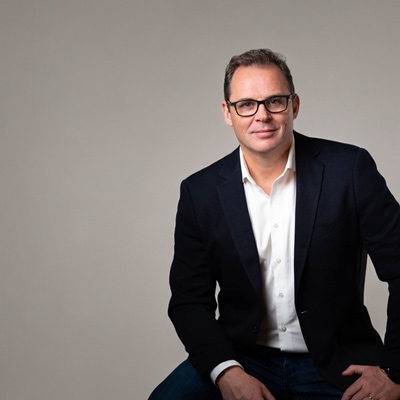
Paul Williams
Group Facilitator and Coach
Paul Williams is a Certified Leadership Coach and accredited facilitator with over 30 years of leadership experience in Christian ministry, missions, and nonprofits across diverse cultures and continents. He has planted and led churches and played a key role in shaping strategy for a leading UK-based Christian relief and development organization.
Southwestern Ontario TEMPO Group
Cambridge, ON.
Drawing from London, Waterloo Region and Hamilton, this pioneering TEMPO community is comprised of a diverse group of leaders serving domestic and global causes through organizations that vary in size from start-ups to medium-sized agencies.
Group Info
Ed Wilson
Group Facilitator
Ed is the founder and lead facilitator for the TEMPO Group collective. Ed launched the Southwestern Ontario TEMPO Group in 2021 following a successful, 32-year career of executive leadership in the nonprofit sector in Canada. The guiding principle of Ed’s life is that teams of people who combine great ideas with great execution can change the world.
Group Information
Meeting Frequency: Bi-monthly
Meeting Location: Cambridge Hotel and Conference Centre
Events

Coldest Night Of The Year 2026
February 28, 2026
The Coldest Night of the Year is a family-friendly fundraising walk in support of local charities serving people experiencing hurt, hunger, and homelessness... because it’s cold out there. Join Mission Services of London on February 28, 2026 - in downtown London, Ontario or across the country!
+ More Info

Ontario Prayer Breakfast
March 12, 2026
The Ontario Prayer Breakfast is an annual opportunity for the Christian community to gather together to support our Members of Provincial Parliament (MPPs) and City Councillors in prayer.
+ More Info
Resources
 What We’re Reading
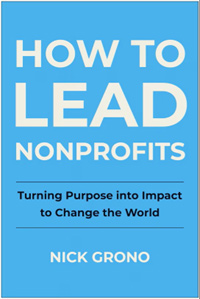
How to Lead Nonprofits: Turning Purpose into Impact to Change the World
by Nick Grono
+ READ THIS

Spiritual Rhythm: Being With Jesus Every Season Of Your Soul
by Mark Buchanan
+ READ THIS
 What We’re Listening To
Leadership Podcast
with Carey Nieuwhof
+ LISTEN TO THIS
A Bit of Optimism
with Simon Sinek
+ LISTEN TO THIS
 What We’re Thinking About
Stealing People's Decisions Is Wrong: Subsidiarity and Leadership
Clement Atlee, who succeeded Winston Churchill as prime minister of the United Kingdom at the end of the Second World War, was notorious for his reliance on clichés and platitudes in his discourse. For example, when Atlee was questioned why he largely remained silent at the Potsdam post-war conference with the Soviet Union and the United States and allowed his foreign minister Ernest Bevin to do all the talking, he had an answer ready. “You don’t keep a dog and bark yourself,” he explained, “and Ernie is a very good dog.”
The proverb “Don’t keep a dog and bark yourself” dates back to 16th century English literature and is a succinct way of articulating the principle of subsidiarity. Although the principle itself can be traced back to the Middle Ages, it was introduced in a formal way by the Catholic Church in the 19th century. A 1931 encyclical by Pius XI stated, “It is an injustice and at the same time a grave evil and disturbance of right order to assign to a greater and higher association what lesser and subordinate organizations can do” (Quadragesimo Anno, 1931, no. 39). In other words, the state should not do what the family can do just as well or better. And a manager should not do what a subordinate can do just as well or better.
In the simplest terms, the principle of subsidiarity teaches that, whether in government, business or any other realm of human collaboration, matters ought to be handled by the smallest, lowest or least centralized authority. One writer on the topic uses the example of a commercial kitchen where you will find a head chef, an assistant head chef and all the sous-chefs who are each in charge of their own areas of expertise. Without a question, the head chef is the leader of the team, but subsidiarity (and common sense) requires him to consult the sous-chefs on their area of expertise. For example, she writes, “if he plans to serve lamb chop as a main for the dinner menu, he needs to consult with the sauce chef on what’s the most suitable sauce to go with this cut of meat.” Application of subsidiarity “prevents the stress of micromanaging on the part of the head chef and allows for creativity and attainment of mastery on the part of the sauce chef.” Likewise, the data administrator in a nonprofit organization who works with donor information every day is in the best position of anyone in the organization to make decisions on how to configure the CRM software to facilitate the production of reports requested by the director of philanthropy. Charles Handy likens the practice of managers stepping in to make decisions their subordinates should permitted to make to stealing: And “stealing people’s decisions is wrong”.
Stealing people’s opportunities to make decisions and use their gifts robs them of an essential part of their humanity.
Subsidiarity is right not only because it makes good business sense but because it is rooted in the conviction that, as uniquely gifted individuals, managers and employees alike flourish when they have the opportunity to use their gifts and abilities for the benefit of others. “We develop best in our work when we use our gifts and freedom to achieve shared goals and to create and sustain right relationships with one another and with those served by the organization. In other words, the more participatory the workplace, the more likely all workers will be able to develop their gifts and talents” (Vocation of the Business Leader: A Reflection, 16). Because each person is always capable of giving something to others, “stealing people’s opportunities to make decisions and use their gifts robs them of an essential part of their humanity” (Respect in Action, 1).
Although Atlee’s maxim, “You don’t keep a dog and bark yourself” was in my vocabulary previously, I was not acquainted with the principle of subsidiarity by name until introduced to it by an Anglican priest (Rev. Kevin Dixon, now rector of Church of St. Jude Anglican in London, Ontario) who joined the team at International Justice Mission Canada in 2015. By that time I had matured in leadership enough to understand that if you come to the C-suite looking for a throne you have severely misjudged the obligations of the role. Charles Handy explains that subsidiarity “implies that the power properly belongs, in the first place, lower down or further out. . .Those in the center are the servants of the parts. The task of the center, and of any leader, is to help the individual or the group to live up to their responsibilities, to enable them to deserve their subsidiarity” (The Age of Paradox, 146). In this sense, as Handy writes elsewhere, “Subsidiarity… is the reverse of empowerment. It is not the center giving away or delegating power.” It is leadership recognizing where power truly lies.
Three Leadership Responsibilities
Leaders who wish to be guided by the principle of subsidiarity must engage in three important culture-making tasks. The first is to establish a corporate culture of trust. “When they embrace subsidiarity, leaders acknowledge that there are risks associated with inviting people to use their gifts and their own judgment. Accepting the risk inherent in trusting others, leaders affirm that the freedom and intelligence of employees should never be suppressed or disregarded” (Respect in Action, 27). The assumption behind subsidiarity is that those higher up may not know better. It is this readiness on the part of the leader to assume risk that makes subsidiarity different from delegation. The one who delegates confers power but can take it back at any time. Those who work in an environment governed by the principle of subsidiarity are called to a higher level of excellence and participation and are more likely to grow and accept their full responsibility than those assigned a task by delegation. Delegation remains a tool for testing performance with increasing levels of risk and trust, so that an employee over time may grow in the degree of autonomy she or he is granted.
The second task for orienting a culture toward subsidiarity is to define the boundaries of autonomy for the various parts of the organization. Handy says, “To be effective, subsidiarity has to be formalized.” “This is a key leadership responsibility since it creates the right conditions for employees to understand their tasks, their degrees of freedom, and their interdependencies within the organization as a whole” (Respect in Action, 32). At IJM Canada, the members of the senior leadership team (those who reported directly to me) understood that they had autonomy in hiring decisions. I asked to be kept informed, would comment on features of individuals they were considering that I found attractive and would formally sign off on the job offer, but otherwise kept my hands off the process. At the same time, I had certain reserve powers. There were moments when, on watershed issues, I took the opinions of the senior leadership team under advisement and gave clear direction. Every employee needs to “understand that there are limits to the autonomy employees can be given in certain situations, and these limits are defined by the impact their decisions can have on others and the business as a whole” (Respect in Action, xvi).
Great leaders create an organization that fosters the effective development of employees by equipping them with the tools, advice, support and affirmation needed to make great decisions.
The final task for leaders is to develop the people that they lead. Subsidiarity presupposes, in Peter Drucker’s words, “that people are an organization’s most valuable resource and that a manager’s job is to prepare and free people to perform” (The Five Most Important Questions You Will Ever Ask About Your Organization, xix). Great leaders create an organization that fosters the effective development of employees by equipping them with the tools, advice, support and affirmation needed to make great decisions within their “empty space”, their area of discretion. An orientation toward subsidiarity sees training and development not as an avenue toward greater productivity and efficiency, but as an investment in the flourishing of uniquely gifted individuals in their place of employment. In fact, a leader’s commitment to subsidiarity may be tested when the employee they have assisted through education, training, mentoring and counsel feels inspired to leave the organization to pursue personal and professional growth in another context.
The theological underpinnings of the principle of subsidiarity, rooted in the idea that each man and woman who joins himself or herself to an enterprise is an expression of imago Dei, challenges the leader to create an environment where human gifts can be more fully realized and where creativity and responsibility can be more concretely expressed. “For such a leader, the principle of subsidiarity is more than a way to design good work, or to make good products, or to offer good services. It is a way to enlarge the possibilities for full human development at work, indeed, for people to become who they were created to be” (Respect in Action, 45). Subsidiarity, says Handy, assumes that “the best thinking is out there, away from the centre, and down there, away from the top”. No one person and no one group is expected to be all-wise, all-knowing, all-competent. Better to let dogs do what dogs do (that is, bark) and let every other creature do what they were created to do
© 2022 Long Run Consulting. Used by permission. A version of this article was first published by Kentro Christian Network: https://kentronetwork.ca/blog/subsidiarty-and-leadership/. Reprinted by permission.
Testimonials
When I arrived at my first TEMPO Group meeting, what I found was people who got it. They were dealing with many of the same things as I was: boards, leadership teams, finances and strategic plans. Things that I previously had no place to process, my new TEMPO colleagues were kind to listen, ask good questions and encourage. It was a safe place, and a community who genuinely cared for one another. Peer learning at its finest.
Kim Evans • CEO, Effect Hope
As an original member of the GTA TEMPO Group, it has been a joy to see the strong bonds of vulnerability and trust that have grown between the members of our group as we listen to expert voices share their wisdom, participate in the ups and downs of every facet of our lives, and coach one another in the critical issues we are facing. All of this rooted in our common faith in Jesus. If you are feeling lonely in leadership, a TEMPO Group is just what you need.
Scott Moore• Executive Director, Youth Unlimited GTA
Contact